
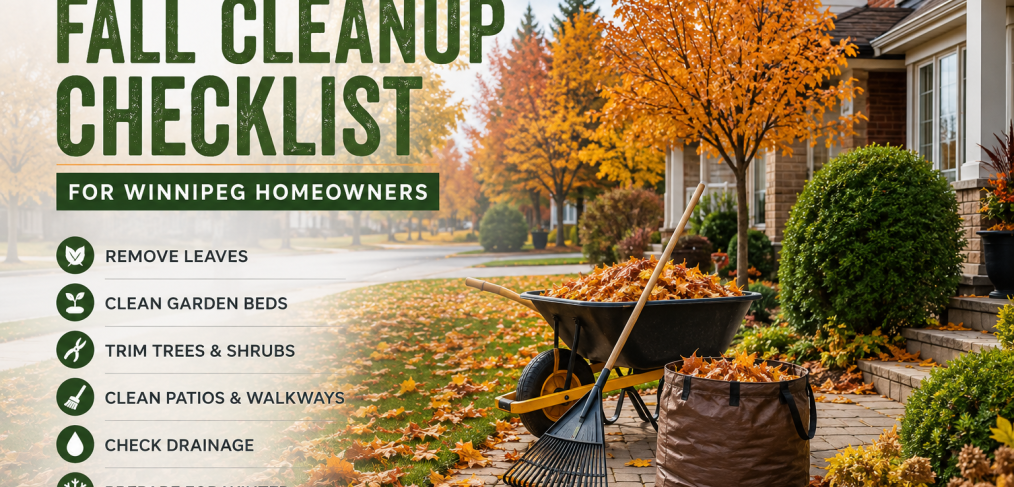
Fall is an important time to prepare your Winnipeg property for the colder months ahead. As leaves begin to fall, temperatures drop and winter approaches, your lawn and landscaping can quickly become covered with leaves, branches and other yard debris.
A thorough fall cleanup in Winnipeg is about more than making your property look tidy. Cleaning up your lawn, garden beds, walkways and outdoor spaces before winter can make spring maintenance easier and help you identify landscaping issues before they are hidden by snow.
If you’re wondering what should actually be done before winter, this checklist can help.
Why Fall Cleanup Matters in Winnipeg
Winnipeg properties experience long, cold winters, significant snowfall and frequent freeze-thaw conditions. Preparing your landscape before winter can make seasonal maintenance more manageable.
Leaves and organic debris can accumulate quickly during the fall. If large amounts remain on the lawn or around landscaping features, they may become wet, compacted and difficult to remove once snow arrives.
A complete fall cleanup gives homeowners an opportunity to:
- Remove excessive leaves and yard debris
- Clean lawns before winter
- Prepare garden beds
- Remove fallen branches
- Inspect trees and shrubs
- Clean patios and walkways
- Clear drainage areas
- Organize outdoor spaces
- Reduce spring cleanup work
The goal isn’t necessarily to remove every natural material from your property. Instead, focus on areas where excessive debris could create maintenance problems or make the property harder to manage through winter.
Winnipeg Fall Cleanup Checklist
Use the following checklist as a starting point for preparing your property.
1. Remove Leaves From the Lawn
Leaf removal should be one of the first priorities during fall cleanup.
A light layer of leaves isn’t necessarily a concern, but thick layers of wet leaves can become compacted against the grass. This can leave the lawn covered for an extended period once winter weather arrives.
During your cleanup, remove excessive leaves from:
- Front lawns
- Backyards
- Side yards
- Around trees
- Along fences
- Under outdoor structures
- Other areas where leaves accumulate
If your property has several mature trees, leaf cleanup can become a significant job as the season progresses.
2. Pick Up Fallen Branches and Yard Debris
Strong winds, storms and seasonal weather can leave branches, twigs and other debris throughout the yard.
Walk around your property and collect:
- Fallen branches
- Twigs
- Dead plant material
- Grass clippings
- Excessive leaves
- Other landscaping debris
Don’t forget less visible areas such as behind sheds, along fences and underneath shrubs.
Removing debris before winter also makes it easier to inspect the condition of your lawn and landscaping.
3. Clean Up Garden Beds
Garden beds can collect a surprising amount of leaves and plant debris throughout the fall.
Remove excessive leaves and unwanted debris while checking plants for damaged or dead growth.
Depending on the type of garden, fall maintenance may include:
- Removing spent annual plants
- Clearing excessive leaves
- Removing fallen branches
- Cleaning around shrubs
- Removing unwanted plant debris
- Adding appropriate mulch
- Preparing selected plants for winter
However, not every plant should be cut back or pruned in the fall. The appropriate approach depends on the plant species and its specific growing requirements.
4. Inspect Trees and Shrubs
Fall cleanup is a good opportunity to inspect trees and shrubs around your property.
Look for:
- Dead branches
- Broken branches
- Damaged limbs
- Weak-looking growth
- Branches interfering with structures
- Storm damage
Winter snow, ice and strong winds can place additional stress on trees and branches.
If you identify large or hazardous branches, professional tree or landscaping assistance may be appropriate rather than attempting the work yourself.
5. Clean Patios, Walkways and Steps
Don’t limit your fall cleanup to the lawn.
Leaves and debris can collect on:
- Patios
- Walkways
- Steps
- Driveways
- Front entrances
- Outdoor living areas
- Garden paths
Clearing these surfaces gives your property a cleaner appearance and prevents piles of organic material from being buried underneath snow.
It also gives you a chance to identify cracks, uneven surfaces or other maintenance issues before winter.
6. Check Your Drainage Areas
Fall is a good time to check areas where water needs to drain away from your property.
Look for leaves and debris around:
- Drainage points
- Downspouts
- Low areas
- Landscape drains
- Walkways
- Areas where water commonly collects
Keeping drainage areas clear can help water move away from the property during fall rains and seasonal temperature changes.
If you repeatedly experience standing water, however, simply removing leaves may not solve the underlying drainage problem.
7. Give Your Lawn a Final Inspection
Before winter, walk over your lawn and look for areas that may need attention.
Check for:
- Bare patches
- Compacted areas
- Excessive thatch
- Weeds
- Damaged sections
- Areas covered by excessive leaves
Fall can be a useful time to identify lawn problems before the grass becomes dormant.
The exact maintenance required will depend on the condition of the lawn and the type of grass on your property.
8. Clean Around Fences, Buildings and Landscaping Features
Leaves don’t only accumulate in open lawn areas.
Wind can push debris into corners and difficult-to-reach locations around:
- Fences
- Garages
- Sheds
- Retaining walls
- Garden structures
- Decks
- Outdoor kitchens
- Landscaping features
These areas are easy to overlook during a quick cleanup, but accumulated debris can make spring cleanup more time-consuming.
9. Manage Your Yard Waste
Once the cleanup begins, you’ll likely have a significant amount of leaves, branches and other yard debris to deal with.
Before starting, determine how you will handle the waste.
Depending on the size of the property, you may need to:
- Bag leaves
- Bundle branches
- Use local yard-waste collection
- Compost suitable organic material
- Arrange professional yard-waste removal
For larger properties, professional cleanup can save considerable time because the crew can handle the collection and removal as part of the service.
10. Plan Your Snow Storage Areas
One task that is often overlooked during fall preparation is deciding where snow will go once winter arrives.
Think about where snow can safely be pushed or piled without blocking:
- Driveways
- Walkways
- Building entrances
- Drainage areas
- Visibility areas
- Parking spaces
- Landscaping features
Planning snow storage before the first major snowfall can make winter property maintenance much easier.
For larger commercial properties, snow storage and hauling requirements should be considered as part of the overall winter maintenance plan.
When Should You Complete Fall Cleanup in Winnipeg?
There isn’t one exact date that works for every Winnipeg property.
The ideal timing depends on:
- How quickly leaves are falling
- Weather conditions
- The number of mature trees on the property
- Property size
- Landscaping requirements
- The expected arrival of winter weather
Many homeowners begin planning in September and complete their main cleanup during October or early November.
The key is to avoid waiting until snow and freezing conditions make outdoor cleanup difficult.
If your property has many trees, it may also make sense to complete an initial cleanup and then do a final leaf cleanup after most of the remaining leaves have fallen.
Should You Remove Every Leaf Before Winter?
Not necessarily.
A small amount of natural leaf material can be beneficial in certain garden areas. However, thick layers of wet leaves on lawn surfaces can create problems and make spring maintenance more difficult.
The best approach depends on where the leaves are located.
For example, homeowners may want to prioritize removing excessive leaves from:
Lawns:
Prevent thick layers from remaining over the grass.
Walkways:
Keep hard surfaces clear.
Drainage areas:
Prevent leaves from obstructing drainage.
Garden beds:
Manage excessive or unwanted material while considering the needs of individual plants.
Patios and entrances:
Keep high-use areas clean and manageable.
What Happens If You Skip Fall Cleanup?
Leaving a property completely untouched throughout the fall can create additional work in spring.
Leaves and debris may become buried beneath snow, while branches and other material can remain hidden until temperatures rise.
When the snow finally melts, homeowners may be left with:
- Wet leaves
- Broken branches
- Lawn debris
- Dead plant material
- Dirty patios
- Cluttered garden beds
- Blocked drainage areas
A thorough fall cleanup gives you a cleaner starting point when spring arrives.
DIY Fall Cleanup vs. Professional Fall Cleanup
For a small yard, homeowners may be able to complete basic cleanup themselves.
However, fall cleanup can become much more time-consuming when a property has mature trees, large lawn areas, extensive garden beds or significant amounts of debris.
Professional fall cleanup services in Winnipeg can be particularly useful for homeowners who:
- Have a large property
- Have several mature trees
- Don’t have the necessary equipment
- Have limited time
- Need significant leaf removal
- Need yard waste hauled away
- Want the property prepared before winter
Viking Landscaping provides Winnipeg fall cleanup services that can be customized according to the needs of the property.
Winnipeg Fall Cleanup Checklist at a Glance
Before winter arrives, review this quick checklist:
☐ Remove excessive leaves from lawns
☐ Pick up fallen branches and debris
☐ Clean garden beds
☐ Inspect trees and shrubs
☐ Complete appropriate seasonal pruning
☐ Clean patios and walkways
☐ Check drainage areas
☐ Clean around fences and structures
☐ Manage yard waste
☐ Plan snow storage areas
☐ Inspect the lawn for problem areas
☐ Schedule professional fall cleanup if needed
Frequently Asked Questions About Fall Cleanup in Winnipeg
When is the best time for fall cleanup in Winnipeg?
The best time depends on leaf drop and weather conditions, but many Winnipeg homeowners plan their main fall cleanup during October or early November. The goal is to complete important work before consistent freezing temperatures and snow arrive.
What is included in a fall cleanup?
A fall cleanup can include leaf removal, lawn debris removal, fallen branch cleanup, garden bed cleanup, patio and walkway cleaning, and yard-waste collection. The exact service depends on the property and its landscaping needs.
Should leaves be removed from my lawn before winter?
Removing excessive leaves from the lawn before winter is generally recommended. Thick layers of wet leaves can become compacted against the grass and may make spring lawn cleanup more difficult.
Do I need professional fall cleanup for a small yard?
Not necessarily. Smaller properties may be manageable for homeowners. Professional service becomes more useful when a property has extensive landscaping, mature trees, large amounts of leaves or significant yard waste.
When should I book fall cleanup services in Winnipeg?
It’s best to schedule professional fall cleanup before the busiest part of the season. Booking early provides more flexibility and allows the service date to be adjusted according to leaf drop and weather.
Can fall cleanup make spring yard maintenance easier?
Yes. Removing excessive leaves, branches and other debris before winter can reduce the amount of material left behind when snow melts, making spring cleanup more manageable.
Get Your Winnipeg Property Ready for Winter
A complete fall cleanup is more than simply raking leaves. It gives homeowners an opportunity to inspect their property, clean important outdoor areas, manage yard debris and prepare their landscape for Winnipeg’s winter conditions.
By completing the right tasks at the right time, you can head into winter with a cleaner, more organized property and make spring maintenance easier.
If your property needs professional fall cleanup in Winnipeg, Viking Landscaping offers seasonal landscaping services designed around the needs of local residential properties.